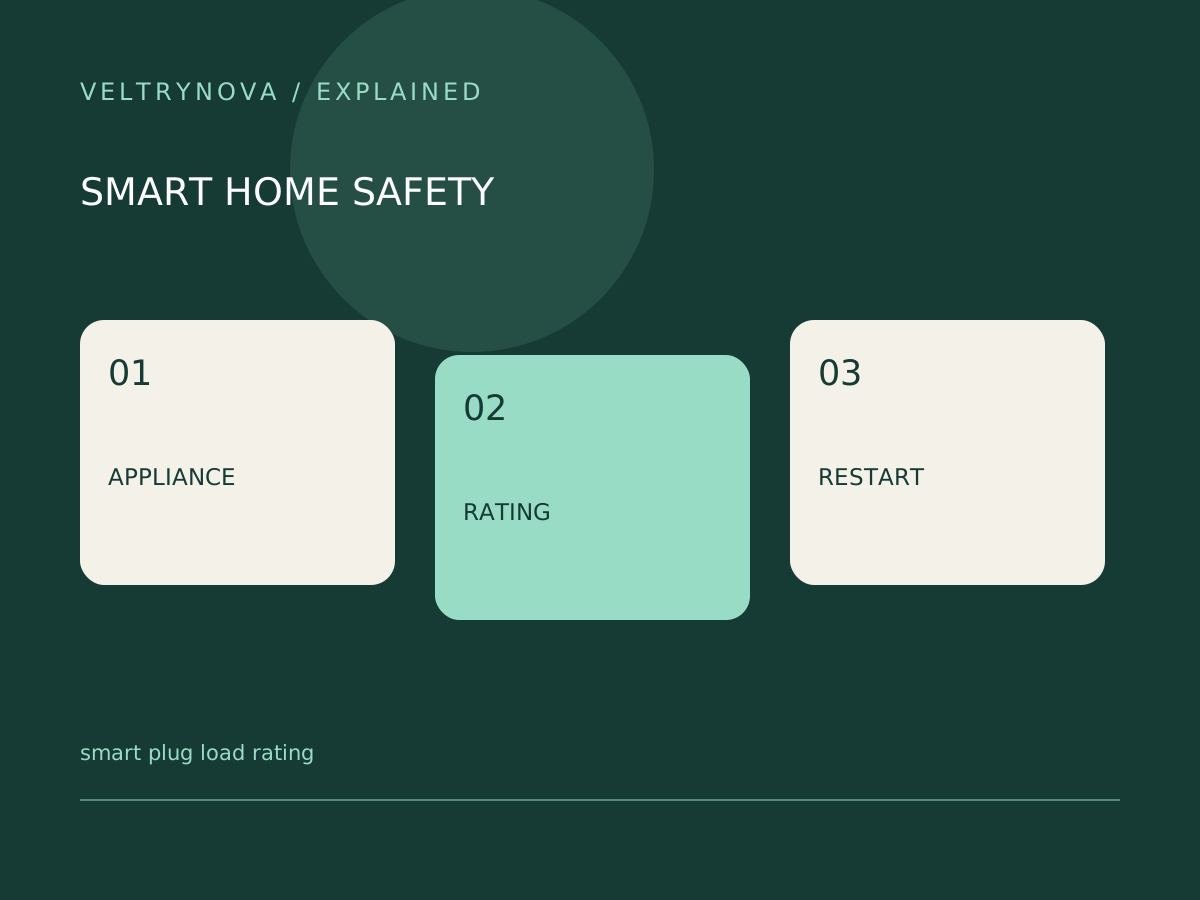
A smart plug adds switching and scheduling. It does not make every appliance suitable for unattended use or remote power cycling.
Begin with the appliance instructions and the plug’s exact rating for the relevant load type. A prominent maximum-power number is not enough to establish suitability for motors, heaters, or every other appliance.
Read both sets of instructions
Identify the appliance’s electrical requirements, operating restrictions, and power-restoration behavior. Then read the smart plug’s permitted uses and limits. For high-heat or safety-critical equipment, follow the manufacturers’ explicit restrictions and consult a qualified professional where needed.
Do not infer compatibility from a successful initial power-on. The important conditions include sustained operation, startup behavior, environmental limits, and the consequences of failure.
Test a low-consequence use first
A suitable lamp is generally easier to evaluate than an appliance with a heater or motor, but the lamp and plug instructions still apply. Keep the physical controls accessible.
Unplug and restore power according to the appliance’s safe procedure to learn whether it resumes, remains off, or requires a button press. Record that behavior before building a schedule.
Decide whether automation helps
If a device cannot safely restart unattended, a smart plug schedule may create risk without providing the expected convenience. A reminder to operate it manually may be the better workflow.
Connected-device interoperability, including Matter, describes control compatibility. It does not replace an electrical suitability assessment. Use Matter compatibility checks only after the appliance and plug are an appropriate combination.
Before relying on a routine, follow our automation test checklist and keep an obvious manual fallback.