A camera’s useful view and its unnecessary view can be only a few degrees apart. Decide what you need to observe before choosing placement or enabling continuous recording.
Start with the people affected by the camera, not just the account owner. Household members, visitors, neighbors, and service workers may enter its field of view. Follow the laws and rules applicable to your location and use.
Define a narrow purpose
Write down the event you want to detect, such as a delivery at your own entrance. Position the camera for that purpose while minimizing capture of adjacent private areas. Avoid recording highly private indoor spaces.
Check the actual image in daylight and low light. Glare, reflections, and obstructions can make an impressive angle less useful than expected.
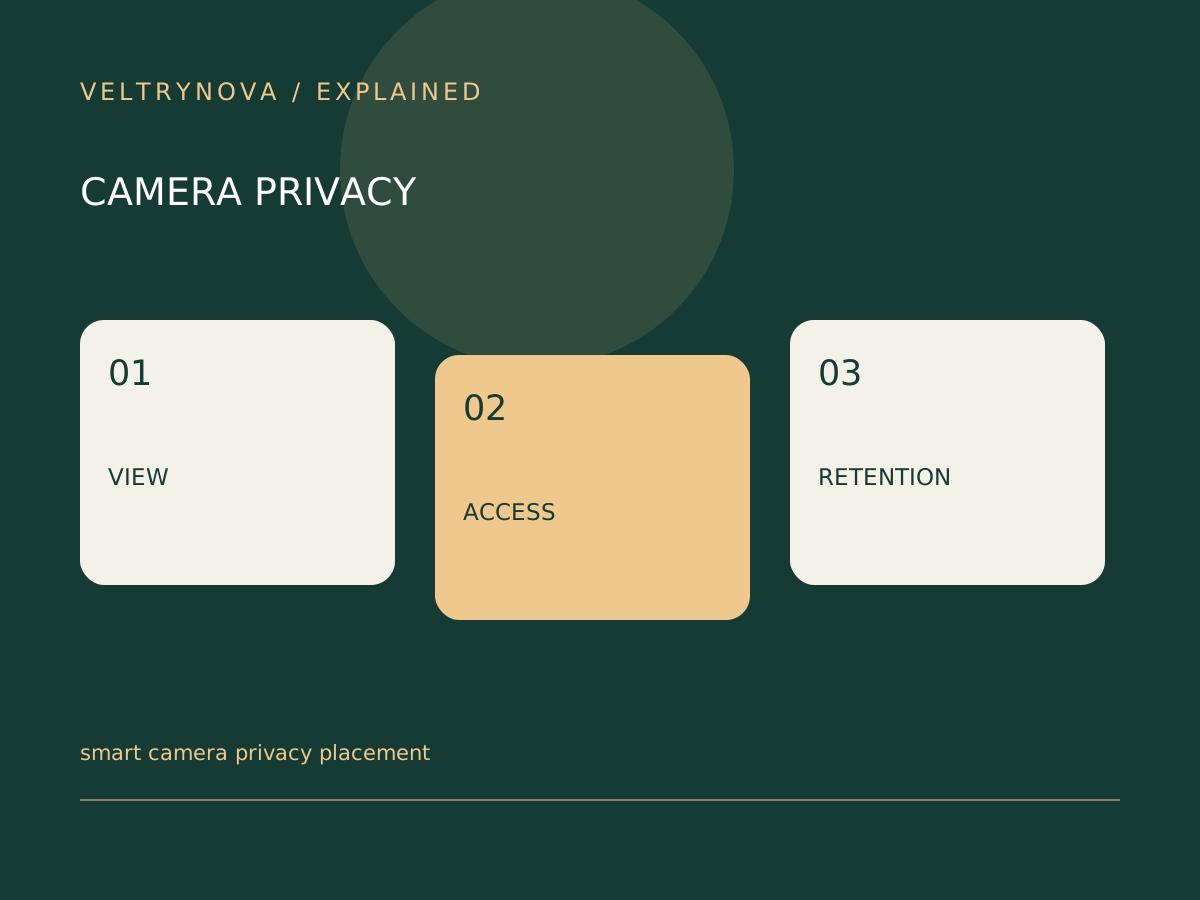
Review access and storage
Identify who can view live video, retrieve recordings, share clips, and change settings. Check whether recording depends on a subscription, local storage, internet access, or a combination.
The FTC’s privacy guidance explains that connected services can collect and use information in several ways. Read the camera provider’s documentation for its specific retention and data practices.
Maintain the device
Use a supported product, review account security, and keep firmware current according to the manufacturer’s instructions. A home network also needs secure router configuration.
Before granting guest access or selling the camera, follow the documented account and device-removal process. Removing an app icon does not establish that an account association or recording copy is gone.
Our home Wi-Fi security guide covers the network layer, and household handoff checklist helps review access when living arrangements change.