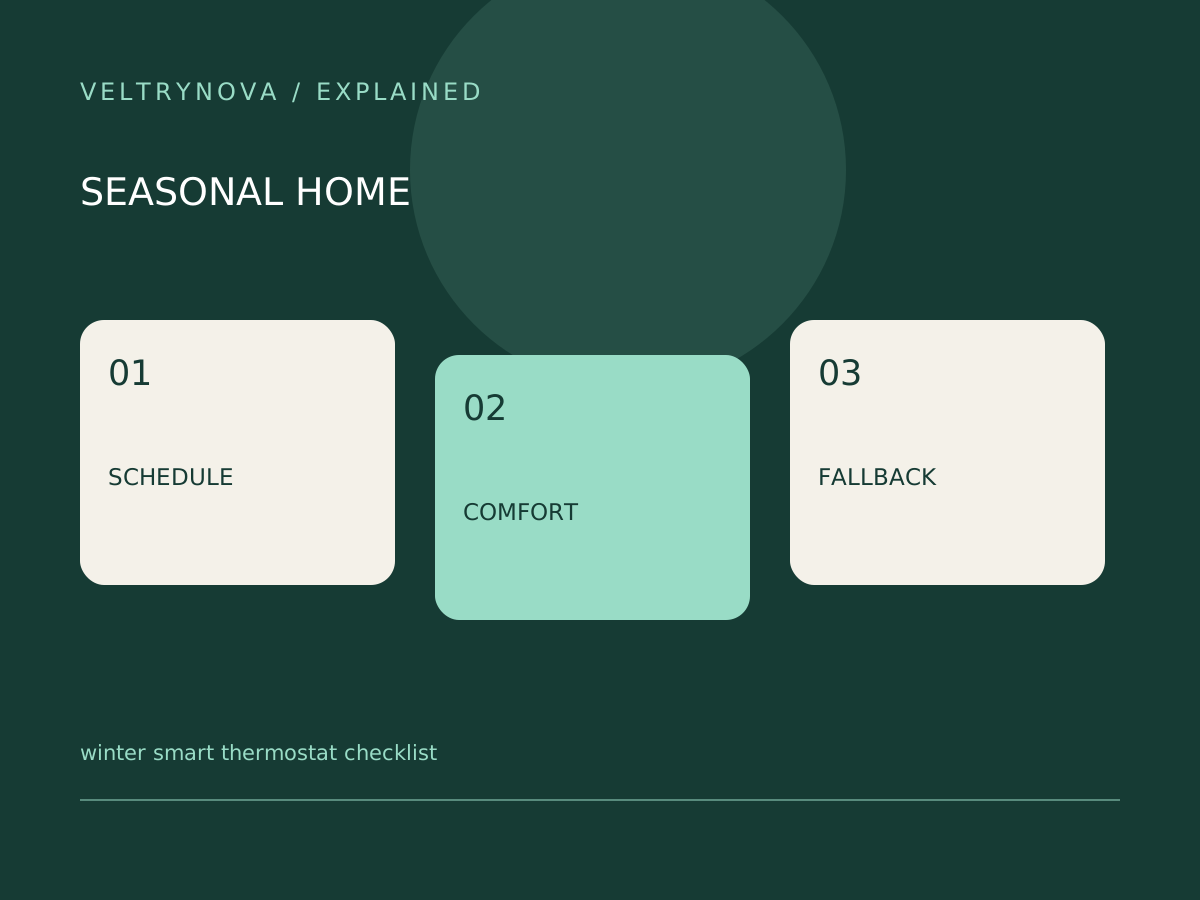
Before winter routines change, inspect your smart thermostat’s schedule and household access. A stale away schedule can be inconvenient even when the device and network are working correctly.
Avoid treating a preset temperature or promised percentage saving as universal advice. Comfort, equipment protection, climate, occupants, and HVAC requirements all affect the appropriate settings.
Review the real week
Map weekdays, weekends, remote work, and expected travel. Check what the thermostat currently does rather than assuming that last winter’s routine still fits.
If learning or occupancy features are active, read how the product uses them. Confirm which schedule has priority and whether a manual adjustment expires or persists.
Check essential control
Make sure household members can change the setting safely without depending on your phone. Confirm what remains available during loss of internet access.
ENERGY STAR’s smart-thermostat program evaluates certified products using field data, but your own results require actual usage and weather context. A lower bill alone does not isolate the thermostat’s contribution.
Respect equipment limits
If you are replacing the thermostat, identify the HVAC system and use the manufacturer’s current compatibility guidance. Leave uncertain wiring or power questions to a qualified professional.
Before traveling, follow the equipment maker’s recommended operating and protection instructions. Remote access is helpful, but it should not be the only plan for a failure affecting the home.
Our thermostat compatibility guide covers purchase prerequisites. The automation checklist helps test control, overrides, and recovery.
Record any meaningful schedule change so that you can explain it when reviewing comfort and energy use later.