“Works locally” is useful only when you identify which function is local. A light responding inside the home, a phone controlling it from another city, and a voice assistant processing a request can follow different paths.
Matter is designed around local interoperability over IP networks. That does not establish that every device feature, controller function, or account service works through an internet outage.
Map the important function
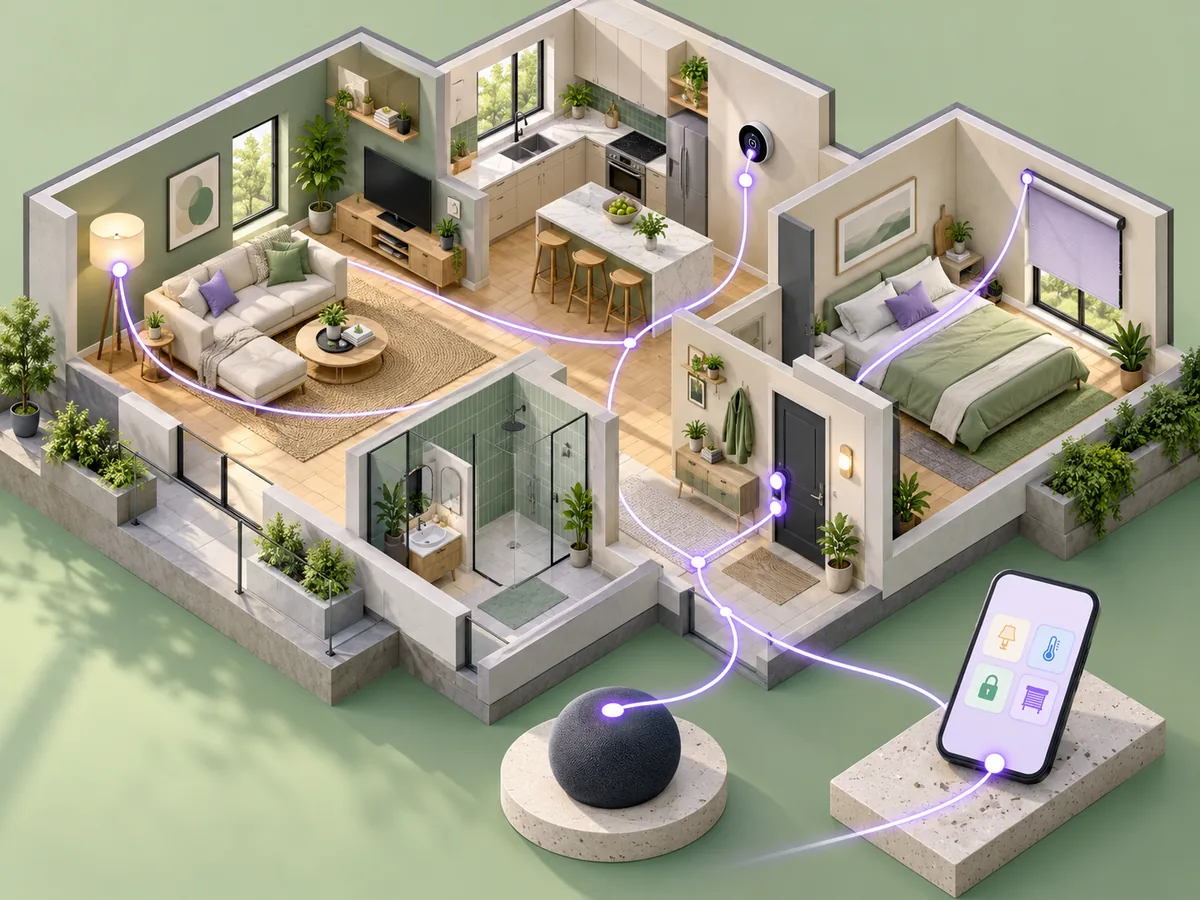
Choose one routine, such as turning on a hallway light after motion. Record the sensor, controller, network, and target device involved. Then ask which parts require a remote service according to their documentation.
A local network still needs power and working equipment. An internet outage and a router outage are different conditions, so testing one does not establish resilience to the other.
Run a controlled test
Pick a convenient time and avoid disrupting locks, alarms, accessibility aids, or equipment somebody depends on. Follow the router manufacturer’s supported method to simulate an internet disconnection while maintaining the local network.
Test physical controls, app control on the local network, the selected routine, and remote access separately. Record what works, what fails, and whether normal operation returns when connectivity is restored.
Keep a usable fallback
A physical switch or manual override can matter more than another app integration. Explain the fallback to household members and guests who may not share your account.
If a feature requires the cloud, decide whether that dependency is acceptable for its importance. Do not interpret “Matter compatible” as an outage guarantee.
Our automation checklist helps test the complete routine, and Matter versus Thread separates the networking dependencies.