An AI itinerary is a useful draft of questions and possibilities. It is not evidence that a train operates, a museum is open, or a traveler meets an entry requirement.
Holiday travel adds unusual hours and crowded connections. Treat every time-sensitive item as something to verify before purchase.
Turn the plan into a checklist
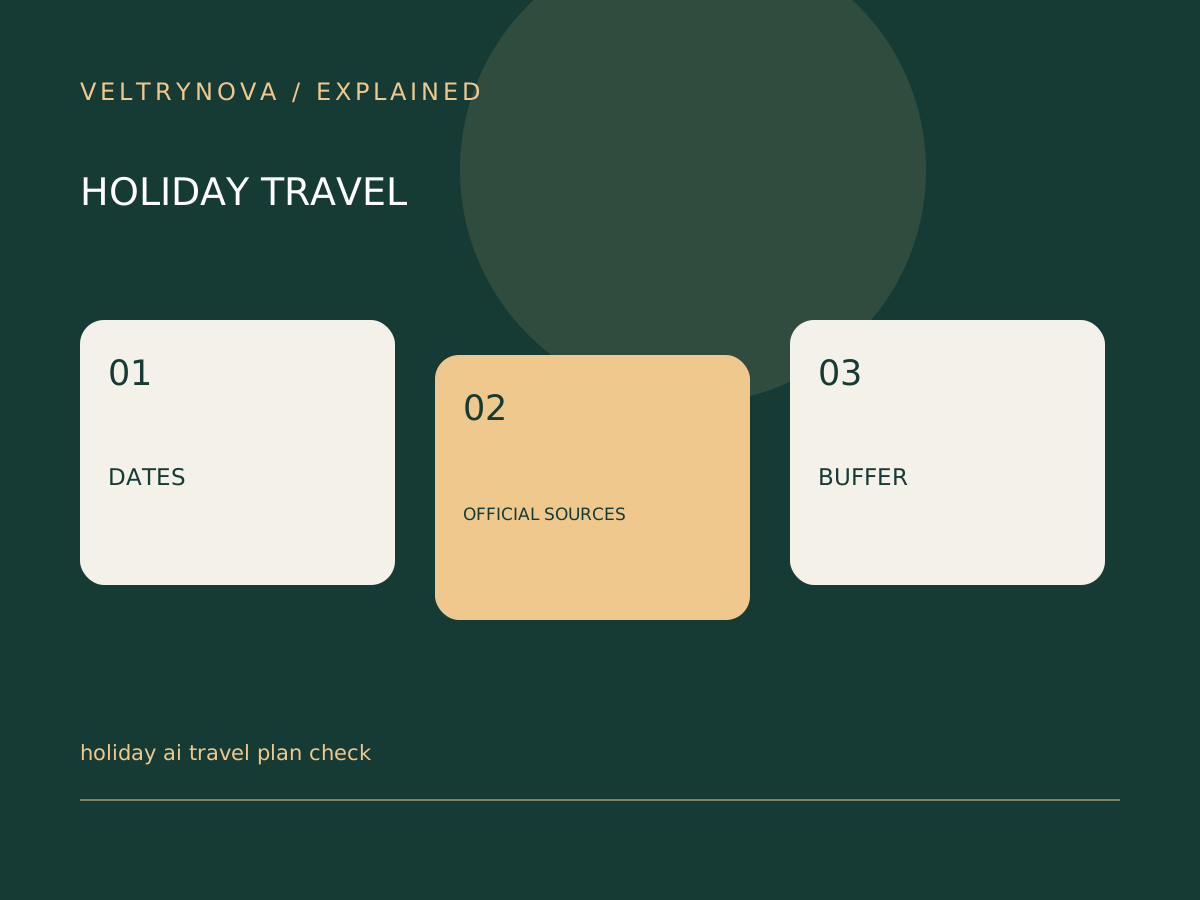
Separate transport, accommodation, attractions, access needs, and official requirements. Attach a date, location, and source field to each consequential item.
Ask the assistant to identify missing information instead of filling it with plausible detail. Exact travel dates and time zones matter when comparing arrival and departure times.
Verify with the responsible source
Check carriers for schedules and baggage rules, venues for opening hours, and the appropriate government authority for entry requirements. Use the actual booking provider’s cancellation and change terms.
For each transfer, allow a realistic buffer based on the location and your circumstances. Do not add a universal margin copied from an unrelated itinerary.
Record which details remain uncertain. If an answer requires a document or eligibility assessment, follow the responsible authority’s process rather than an assistant’s reassurance.
Recheck before departure
Keep a small dated source list with your travel documents. Confirm critical timings again close to the trip, particularly around public holidays.
Avoid uploading full identity documents, payment details, or other sensitive material to a general-purpose assistant merely to improve a route suggestion. Provide only the minimum information necessary.
Our AI citation audit explains how to verify a generated reference. NIST’s generative-AI guidance provides broader risk context; it does not endorse an itinerary or validate a reservation.
Use AI to organize the investigation, then book from checked information.